Description
Overview
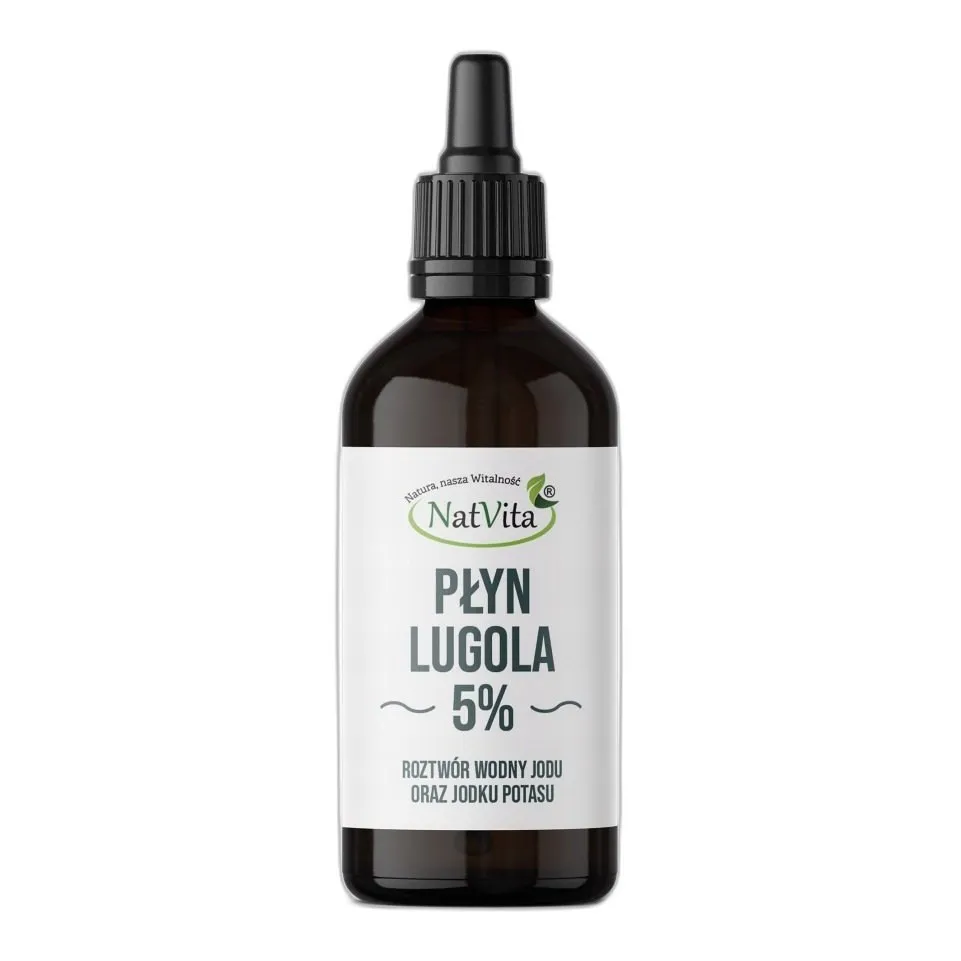
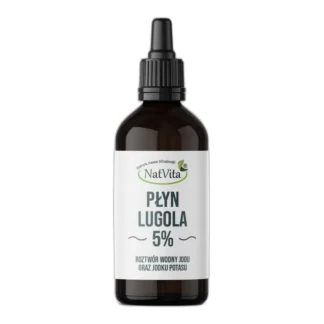
Lugol’s Solution is a water-based mixture of elemental iodine (I₂) and potassium iodide (KI). Chemical formula: I₂ + KI. CAS for iodine: 7553-56-2, for KI: 7681-11-0. Molar mass: 253.81 g/mol (I₂), 166.00 g/mol (KI). Supplied as 5% iodine and 10% KI in purified water. Appears as a dark brown liquid. Purity exceeds 99.99%. Used in laboratory environments for chemical and biological testing.
Applications
Detects starch in plant tissues through a blue-black color reaction. Used in cytology to stain cell nuclei. Applied in thyroid tissue analysis in anatomical studies. Employed in water disinfection research. Used in redox chemistry experiments. Helps visualize glycogen in histological sections. Applied in educational labs to demonstrate halogen reactivity. Also used in environmental testing for organic compound identification.
Specifications
Form: Liquid. Iodine concentration: 50 g/L. KI concentration: 100 g/L. Solution is clear and dark amber. Stable under proper storage. Store in amber glass at 15–25°C. Avoid exposure to light and heat. Compatible with glass and PTFE materials. Do not store in metal containers.
Safety
Causes skin and eye burns. Harmful if swallowed. GHS: Corrosion and acute toxicity. H314, H330, H310. P260, P280, P303+P361+P351+P353. Use face shield, gloves, and fume hood when handling. Keep away from flammables. Emergency wash stations should be accessible.
FAQ
Why does it turn starch black?
Iodine fits into starch helices, forming a complex that absorbs light differently.
Can it be diluted?
Yes. Dilute with distilled water for lower reactivity.
Is it light-sensitive?
Yes. Store in dark bottles to prevent degradation.
How to dispose of it?
Follow local hazardous waste regulations for halogens.
What is KI’s role?
KI increases iodine solubility by forming triiodide ions (I₃⁻).
Reviews
There are no reviews yet.